Summary
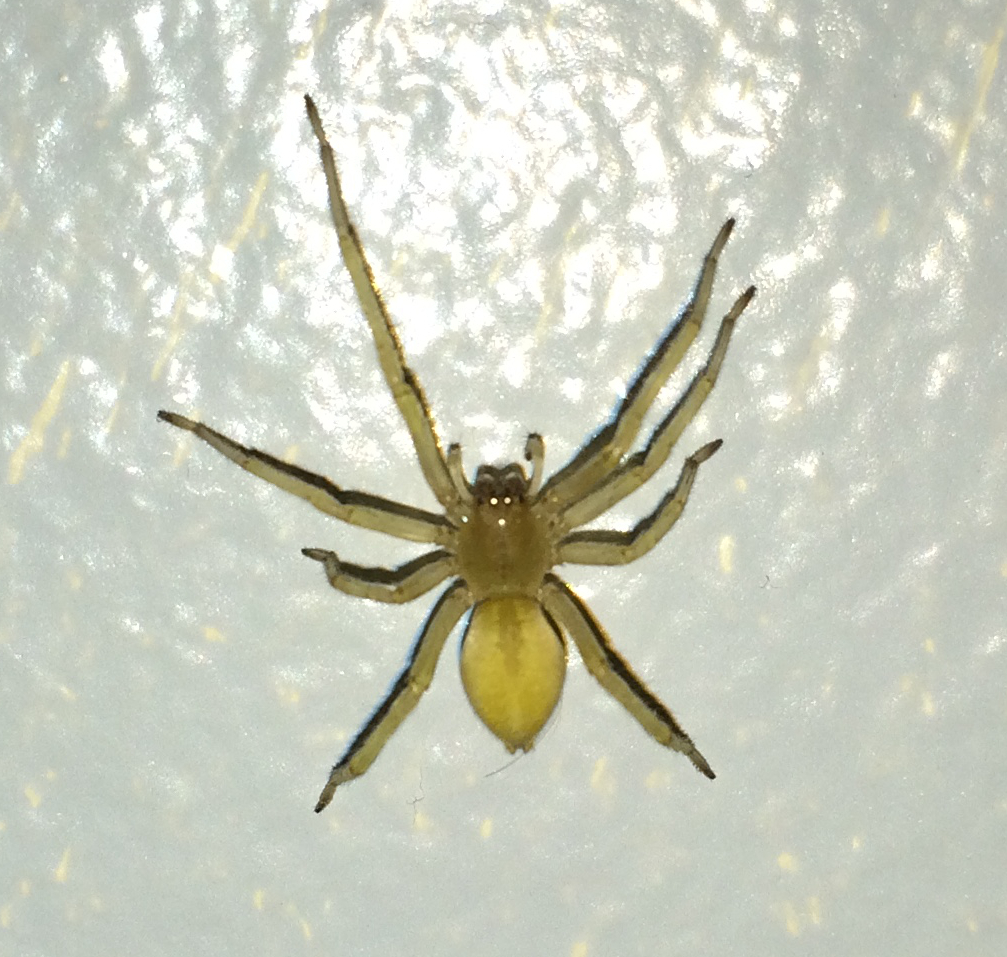
A small pale spider commonly found indoors throughout North America. Although its bite is sometimes painful and was historically blamed for necrotic lesions, current evidence suggests true necrosis is rare.
Quick answers
- Is Yellow Sac Spider dangerous to humans?
- Sometimes. Yellow Sac Spider bites are usually self-limiting, but a minority of cases produce notable local symptoms. Most do not require medical care.
- How big is an adult yellow sac spider?
- Adult female body length is 5–10 mm; males are 4–8 mm. Leg span reaches 16–25 mm.
- Where does Yellow Sac Spider live?
- Indoors on walls and ceiling corners; outdoors on vegetation. Notorious for being attracted to volatile hydrocarbons (linked to vehicle fuel line blockages). Established U.S. populations occur in 1 states.
- What does Yellow Sac Spider eat and when is it active?
- Small soft-bodied insects, other spiders, insect eggs. Nocturnal active hunter. Drops to the floor and runs when disturbed.
Identification
- Pale yellow to greenish-tan body, 5–10 mm
- Dark fang area contrasting with pale body
- Long, prominent front legs
- Builds a small silk retreat sac where wall meets ceiling
- No web for prey capture
Morphometrics
| Measurement | Female | Male |
|---|---|---|
| Body length | 5–10 mm | 4–8 mm |
| Leg span | 16–25 mm | - |
| Lifespan | 1–2 years | - |
| Trait | Value |
|---|---|
| Web type | No prey-capture web; builds a small silk retreat sac in ceiling corners or under leaves. |
| Eye arrangement | Eight eyes in two rows of four, roughly equal in size. |
| Eggs per sac | 30–50 |
| Egg sacs per year | 1–5 |
Geographic range
Native range: Throughout the continental United States and southern Canada.
U.S. states with established populations: All 48 contiguous U.S. states.
State pages covering Yellow Sac Spider
AlabamaAlaskaArizonaArkansasCaliforniaColoradoConnecticutDelawareFloridaGeorgiaHawaiiIdahoIllinoisIndianaIowaKansasKentuckyLouisianaMaineMarylandMassachusettsMichiganMinnesotaMississippiMissouriMontanaNebraskaNevadaNew HampshireNew JerseyNew MexicoNew YorkNorth CarolinaNorth DakotaOhioOklahomaOregonPennsylvaniaRhode IslandSouth CarolinaSouth DakotaTennesseeTexasUtahVermontVirginiaWashingtonWest VirginiaWisconsinWyoming
Habitat & behavior
Habitat: Indoors on walls and ceiling corners; outdoors on vegetation. Notorious for being attracted to volatile hydrocarbons (linked to vehicle fuel line blockages).
Activity: Nocturnal active hunter. Drops to the floor and runs when disturbed.
Diet: Small soft-bodied insects, other spiders, insect eggs.
Venom & medical significance
| Venom property | Value |
|---|---|
| Type | Cytotoxic activity reported but contested |
| LD₅₀ | Not established |
| Note | Historically implicated in necrotic bites, but recent reviews (Vetter 2008, Foradori 2005) find limited evidence for true necrosis from C. inclusum. |
Bite symptoms & first aid
Symptoms
- Sharp, immediate pain (often the only spider bite the victim feels at the moment of bite)
- Local redness and swelling lasting 1–10 days
- Necrotic lesions reported historically but not consistently confirmed in controlled studies
Commonly confused with
- Brown recluse
- Long-legged sac spider
- Wolf spider (small specimens)
Key facts
- Yellow sac spiders have been documented chewing on vehicle fuel-vapor lines, leading to fuel system failures - a Mazda recall in 2014 was attributed to this behavior. [1]
Sources
- [1]Yellow Sac Spider - Penn State Extension. Accessed 2026-06-14.
- [2]Vetter, R. (2008). Spiders of the genus Cheiracanthium - Journal of Medical Entomology. Accessed 2026-06-14.