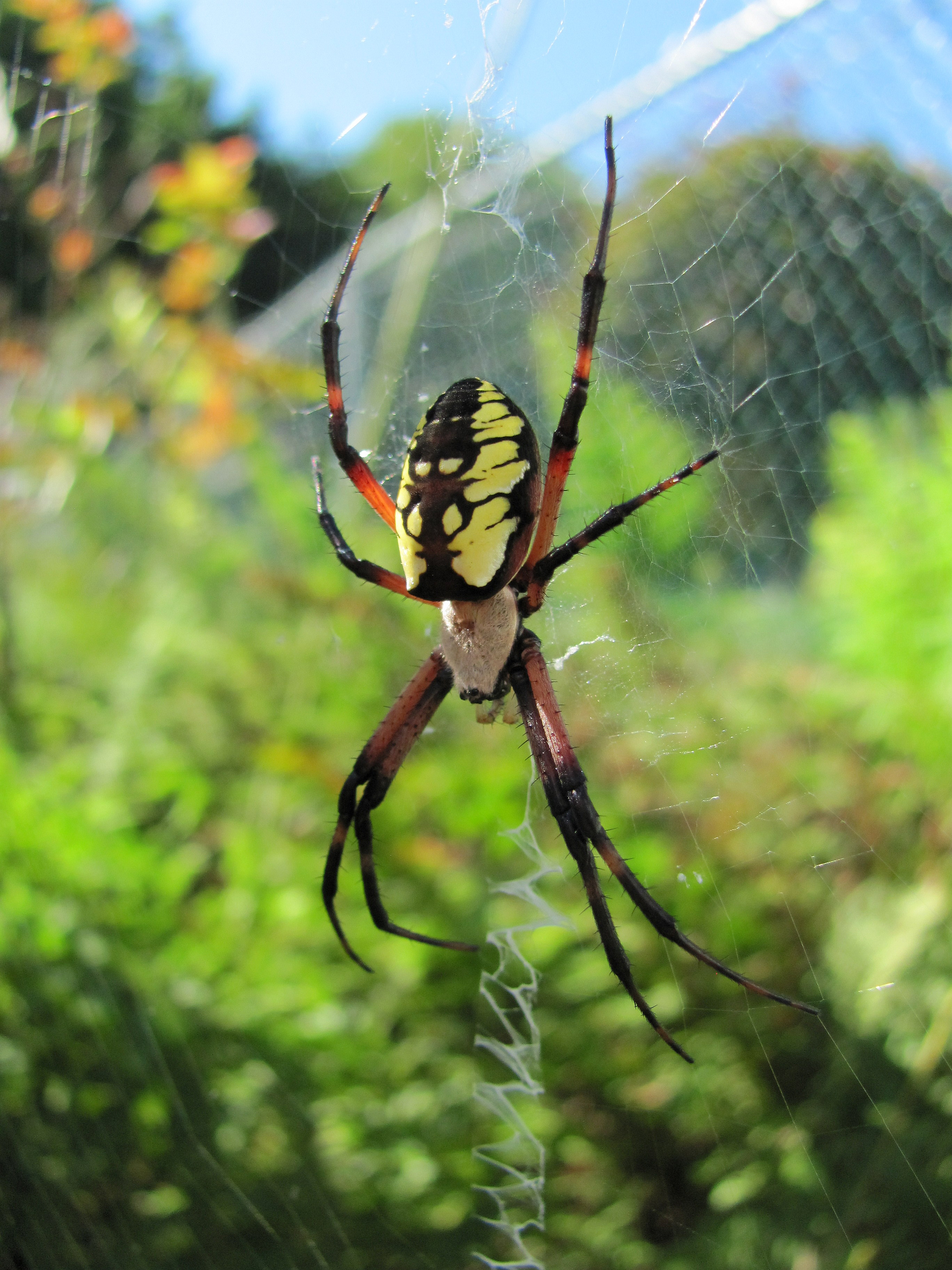
Spiders of the United States
Sourced profiles of 19 spider species encountered in U.S. homes. Each page documents morphometrics, geographic range, medical significance, and integrated pest-management guidance, with citations to peer-reviewed literature, university extension publications, and the CDC.
Medically significant spiders in North America
The two genera of established medical significance in the United States are Loxosceles (recluse) and Latrodectus (widow). The species below account for the overwhelming majority of confirmed bites in the medical literature.
| Common name | Species | Female body | Venom | Range states | |
|---|---|---|---|---|---|
| Brown Recluse | Loxosceles reclusa | 7–12 mm | Cytotoxic (sphingomyelinase D) | 16 states | Medically significant |
| Southern Black Widow | Latrodectus mactans | 8–13 mm | Neurotoxic (alpha-latrotoxin) | 23 states | Medically significant |
| Western Black Widow | Latrodectus hesperus | 8–16 mm | Neurotoxic (alpha-latrotoxin) | 17 states | Medically significant |
| Northern Black Widow | Latrodectus variolus | 9–11 mm | Neurotoxic (alpha-latrotoxin) | 18 states | Medically significant |
| Red Widow | Latrodectus bishopi | 9–13 mm | Neurotoxic (alpha-latrotoxin) | 1 states | Medically significant |
| Chilean Recluse | Loxosceles laeta | 8–15 mm | Cytotoxic (sphingomyelinase D); higher potency than L. reclusa | 1 states | Medically significant |
Sources: CDC NIOSH Venomous Spiders, UC Statewide IPM Pest Notes, UF IFAS Featured Creatures. See per-species pages for full citations.
Commonly confused species
A majority of reported recluse and widow sightings are misidentifications. These pages compare the species pairs most often mistaken for one another on the morphological traits that actually separate them.

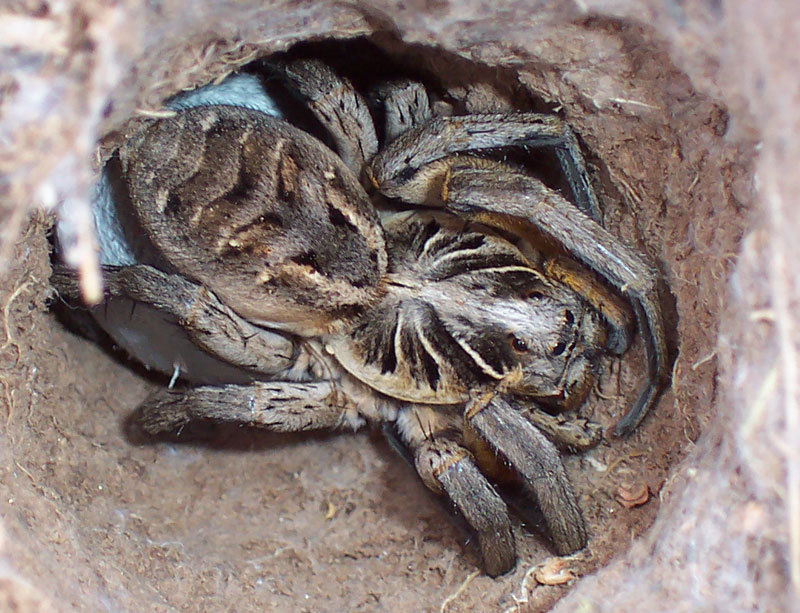
Brown recluses are small, smooth-legged, six-eyed spiders that hide indoors. Wolf spiders are large, robust, eight-eyed ground hunters with visible leg spines and a stockier build.

Cellar spiders have extremely long, thin legs (3–4× body length), a small pale body, and build messy webs in ceiling corners. Brown recluses have legs only 2× body length and do not build prey webs.


Black widows are glossy jet-black with a red hourglass. Brown widows are tan with an orange-to-yellow hourglass and a spiky, tufted egg sac unlike any other widow.


Both genera build large golden orb webs and have leg spans approaching 4 inches. Joros are yellow-and-blue with a red underside; golden silks are yellow with brown leg tufts.
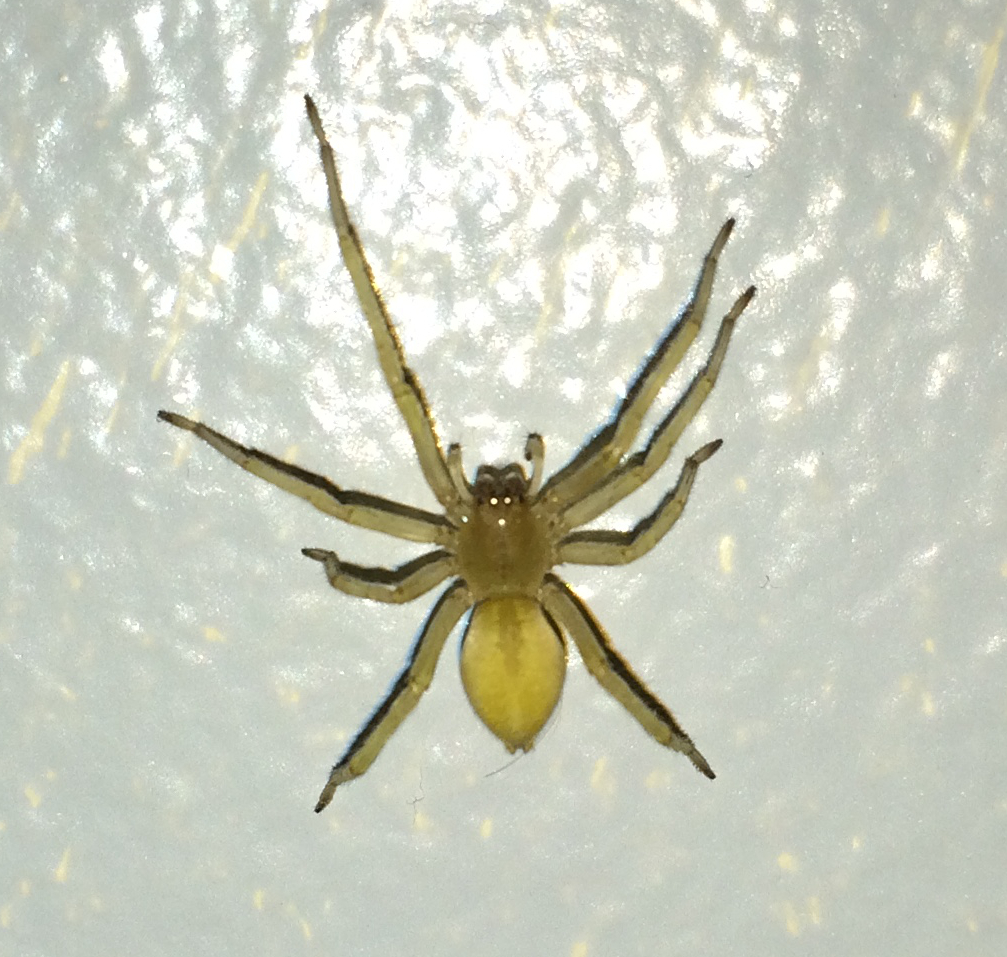
Yellow sac spiders are pale yellow-green with dark fang tips and eight eyes in two rows. Brown recluses are uniform tan-brown with six eyes and a violin mark.


Giant house spiders are larger, darker, and have solid dark bands on the sternum. Hobo spiders are smaller with a herringbone abdomen pattern and pale sternum stripes.
Wolf spiders have two huge headlight eyes; hobos have eight small, roughly equal eyes in two rows. Wolves do not build webs; hobos build funnel sheets.
Fishing spiders have eight roughly equal eyes in two slightly curved rows and are nearly always found near water. Wolf spiders have two large 'headlight' eyes and three eye rows.

Jumping spiders are tiny (4–18 mm), compact, with two enormous forward eyes. Wolf spiders are far larger, longer-legged, and have three rows of eyes.

Common house spiders are mottled tan-and-brown; black widows are glossy jet-black with a red ventral hourglass. Their webs and posture are otherwise nearly identical.

Southern females have a complete red hourglass and no dorsal markings. Northern females have a broken (two-triangle) hourglass and a row of red dorsal spots down the abdomen.

Western black widows occupy the U.S. West; southerns occupy the Southeast and Gulf. Markings are nearly identical. Bite management is the same.

Red widows have an orange-red cephalothorax and legs with a black abdomen; black widows are uniformly glossy black. Red widows are a Florida endemic.

Grass spiders have long, prominent rear spinnerets and bold stripes on the cephalothorax. Hobo spiders have short spinnerets and a more subdued pattern.

Male southern house spiders have very long legs and a small body but eight eyes in a tight cluster and no violin mark. Females are large, dark, and live in radial silk retreats around windows.
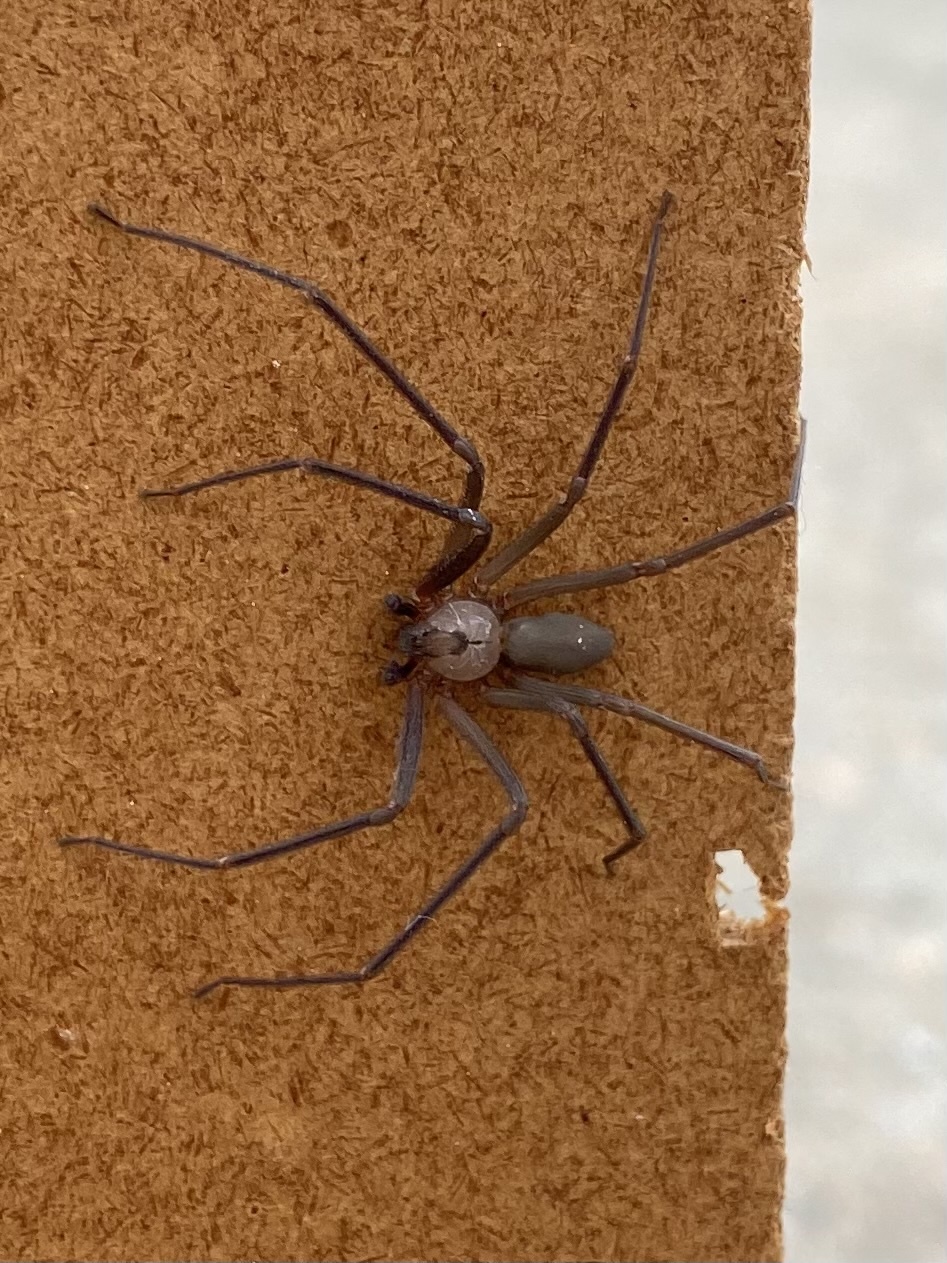
Chilean recluses are larger (body 8–12 mm vs. 6–12 mm), darker, and carry venom with substantially higher loxoscelism risk including systemic effects. Both have six eyes and a violin.

Yellow garden spiders have bold yellow-and-black blotches; banded garden spiders have fine silver-and-yellow horizontal bands. Both build stabilimentum zigzags.
Cellar spiders (Pholcidae) are true spiders with two body sections, eight eyes, silk webs, and venom. Harvestmen (Opiliones) have a single fused body, two eyes, no silk, and no venom.
Sections
The reference is organized into the sections below. Each draws on primary literature, university extension publications, and verified field records.
Identification, morphometrics, range, and venom data for each species.
Stepwise keys by eye arrangement, body, web type, color, and habitat.
Diagnostic traits separating the most commonly confused species.
Medically significant spiders established in each U.S. state.
Symptom timelines, first aid, and criteria for medical evaluation.
Eye arrangement, silk, molting, venom apparatus, and life cycle.
Web building, hunting strategy, mating, and dispersal.
Exclusion, sanitation, monitoring, and treatment from extension sources.
Common claims tested against the peer-reviewed evidence.
Terminology, taxonomy, and measurement conventions used across the site.
Frequently asked questions, each answered with sources.
Downloadable datasets, lookup tables, and reference data.
Species pages
Each profile documents morphometrics, geographic range, web type, eye arrangement, egg-sac data, identifying features, and primary-source citations.
The brown recluse is one of two spider species in North America whose venom is established as capable of causing medically significant injury in humans. Its native range is tightly bounded - confirmed established populations occur in a band from southern Iowa through eastern Texas - and the species is frequently misidentified outside that range.
The southern black widow is the most familiar of the North American widow spiders, recognized by the glossy black female with a complete red hourglass on the underside of the abdomen. Bites are uncommon but medically significant; antivenom exists.
The western black widow occupies the arid western half of the continent and is the widow species responsible for the overwhelming majority of bites reported in California, Arizona, and the Mountain West.
An invasive widow that has rapidly displaced native black widows across the southern United States. The brown widow's venom is comparable in potency to the black widow's, but smaller venom yields produce milder envenomations.
Once listed by the CDC as a spider of medical concern, the hobo spider was formally removed from that list in 2017 after subsequent research failed to replicate the necrotic effects originally attributed to its bite.
A small pale spider commonly found indoors throughout North America. Although its bite is sometimes painful and was historically blamed for necrotic lesions, current evidence suggests true necrosis is rare.
A large, brightly colored orb weaver native to East Asia that was first documented in north Georgia in 2014. Joro spiders have since spread across much of the southeastern United States and are projected to continue expanding because of their unusual cold tolerance for a tropical-origin spider.
The northern black widow is the widow species of the northeastern United States and southeastern Canada. The female is distinguished from L. mactans by a broken (not continuous) red hourglass and a row of red spots running down the dorsal midline of the abdomen.
A Florida-endemic widow restricted to scrub-pine habitat in the central and southern peninsula. Distinct from other North American widows in coloration - orange-red cephalothorax and legs with a black abdomen marked by red spots, and no ventral hourglass.
The most frequently encountered indoor spider across temperate North America. Often confused with widow spiders because of its similar tangled cobweb and spherical abdomen, but its mottled brown coloration and small size distinguish it.
Wolf spiders are large, fast-moving ground-hunting spiders frequently mistaken for brown recluses because of their brown coloration. Unlike recluses, they have eight eyes in a distinctive three-row pattern, do not build prey-capture webs, and are not medically significant.
The long-bodied cellar spider is the source of the persistent 'most venomous spider in the world' myth. The claim is false: while the spider does bite humans, its venom is mild and has no documented medical significance. The species is also frequently confused with the harvestman (true daddy long-legs, Opiliones), which is not a spider at all.
The most commonly encountered jumping spider in North America. Recognized by its compact black body, iridescent green chelicerae, and three white or orange spots on the dorsal abdomen. Jumping spiders are diurnal active hunters with the sharpest vision of any arthropod and are not medically significant.
A large, conspicuous orb weaver of gardens and meadows across the Lower 48. Recognized by the female's bold black-and-yellow markings and the prominent zig-zag stabilimentum woven into the center of her web.
A large orb weaver of the southeastern United States, known for the golden tint of its silk and its very large, persistent webs. Frequently called 'banana spider' in the southeast - a common name that creates confusion with the unrelated and highly venomous Phoneutria of Central and South America.
Grass spiders are funnel-weaving agelenids that build sheet webs with a tubular retreat in lawns, ground cover, and along foundations. Frequently confused with wolf spiders and hobo spiders. They are not medically significant.
A large crevice-weaving spider common in the U.S. South. Males are large, leggy, and frequently mistaken for brown recluses; females are darker, robust, and stay hidden in crevices on the outsides of buildings.
A large funnel-weaving spider introduced to the Pacific Northwest from Europe. Closely related to the hobo spider and increasingly displacing it indoors. Conspicuous because of its size - leg span can exceed 100 mm - but not medically significant.
The most medically significant recluse worldwide. Native to South America and introduced to a few U.S. localities (notably Los Angeles County). Bites are responsible for the majority of confirmed loxoscelism worldwide and have a higher rate of systemic complications than L. reclusa.
Every factual claim is linked to its source: peer-reviewed journals, university extension publications, CDC NIOSH, and the AMNH spider catalog.
Data sources →Factual corrections are logged publicly with dates, the page affected, and the source that prompted the change.
Editorial standards →Structured citation metadata is provided on every page. Editorial content is licensed CC BY 4.0 with attribution.
Citation policy →